Guides
Getting Around Nice: Scooter, Tram, Car, Bike or On Foot?
In short
Getting around Nice is easy without a car. Walk the centre and the Old Town, take tram line 2 from the airport to the city and the port, and use coastal trains for one-way trips. For the seafront, the hills and spontaneous stops in Villefranche or Cap Ferrat, a scooter gives you the most freedom.
Most visitors land at Nice Côte d'Azur airport with the same question: what is the best way of getting around Nice? Do you need a hire car, can you rely on the tram, and is a scooter really a good idea for someone used to driving on the left? The honest answer is that each option shines in different situations. Here is a practical breakdown from a local rental company, including the options that are not ours.
Arriving: from the airport to the city
The airport is close to the city, which is a real luxury. Tram line 2 runs from the airport terminals into the centre and on to the port, partly underground through the city. It is affordable and simple, even with a suitcase on wheels. Fares and ticket formats change from time to time, so check the Lignes d'Azur website or app before you fly.
A taxi or a ride-hailing car is the easy alternative if you arrive late, travel with lots of luggage or are heading somewhere away from the tram line.
Walking: unbeatable in the centre
Central Nice is compact. From Place Masséna you can stroll to the Cours Saleya market, through the lanes of the Old Town and around the headland to Port Lympia without ever needing a ticket. The Old Town is largely pedestrian anyway, and the Promenade des Anglais is made for long walks.
Things change once you look uphill. Cimiez, Mont Boron and Castle Hill are all walkable, but the climbs are real, especially in summer. And for the coastal villages, walking is no longer an option.
Trams, buses and coastal trains
The Lignes d'Azur network covers the city with several tram lines and a dense bus network. Line 1 runs north to south through the centre via Avenue Jean-Médecin and Place Masséna; line 2 links the airport and the port. For straight-line journeys, it is cheap and efficient.
Buses also reach neighbouring towns along the coast, but they can be slow, crowded in high season and tied to timetables. The regional TER train is a good alternative for one-way trips along the shore, with stations in Villefranche, Beaulieu and Èze-sur-Mer. The catch is the same for both: you only go where the line goes, and the best coves and viewpoints rarely sit next to a stop.
Do you need a car in Nice?
For a city break, usually not. A hire car makes sense if you plan to explore the hill villages inland, travel with small children or carry bulky gear. In town, though, it is hard work: heavy traffic at peak times, one-way systems, and paid on-street parking in marked zones from Monday to Saturday during the day. Underground car parks are convenient but add up quickly over a week, and the Old Town is closed to you anyway.
Keep in mind too that French roundabouts, priority rules and narrow hairpins can be tiring after a long flight, especially in a car you do not know.
Bikes, taxis and ride-hailing
Bikes. The cycle path along the Promenade des Anglais is flat, wide and gorgeous at sunrise. App-based bike-share schemes, many with electric bikes, operate across the metropolitan area. Perfect for the seafront; much harder work on the hills and in the midday heat.
Taxis and ride-hailing. Comfortable for a late dinner, the airport run or an evening when you would rather not ride. They are also the most expensive option for daily use, they sit in the same traffic as everyone else, and a day of stop-and-go sightseeing quickly becomes costly.
Getting around Nice by scooter
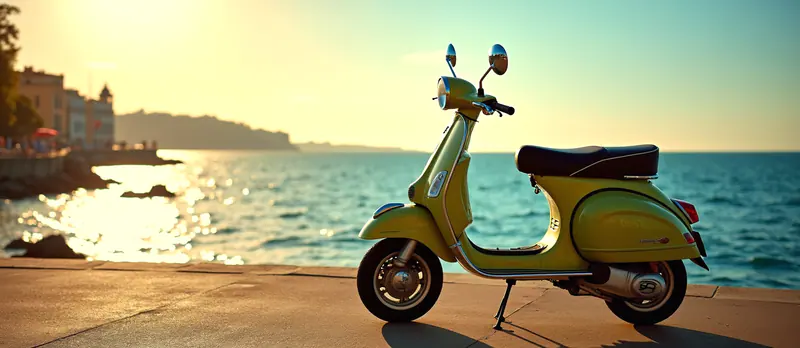
A scooter combines the best of the other options. It slips through city traffic, parks in the marked two-wheeler bays found in almost every neighbourhood, climbs to Cimiez or Mont Boron without effort and takes you along the Basse Corniche to Villefranche, Beaulieu and Saint-Jean-Cap-Ferrat on your own schedule. See a cove you like? Stop. Fancy a coffee with a view? Stop again.
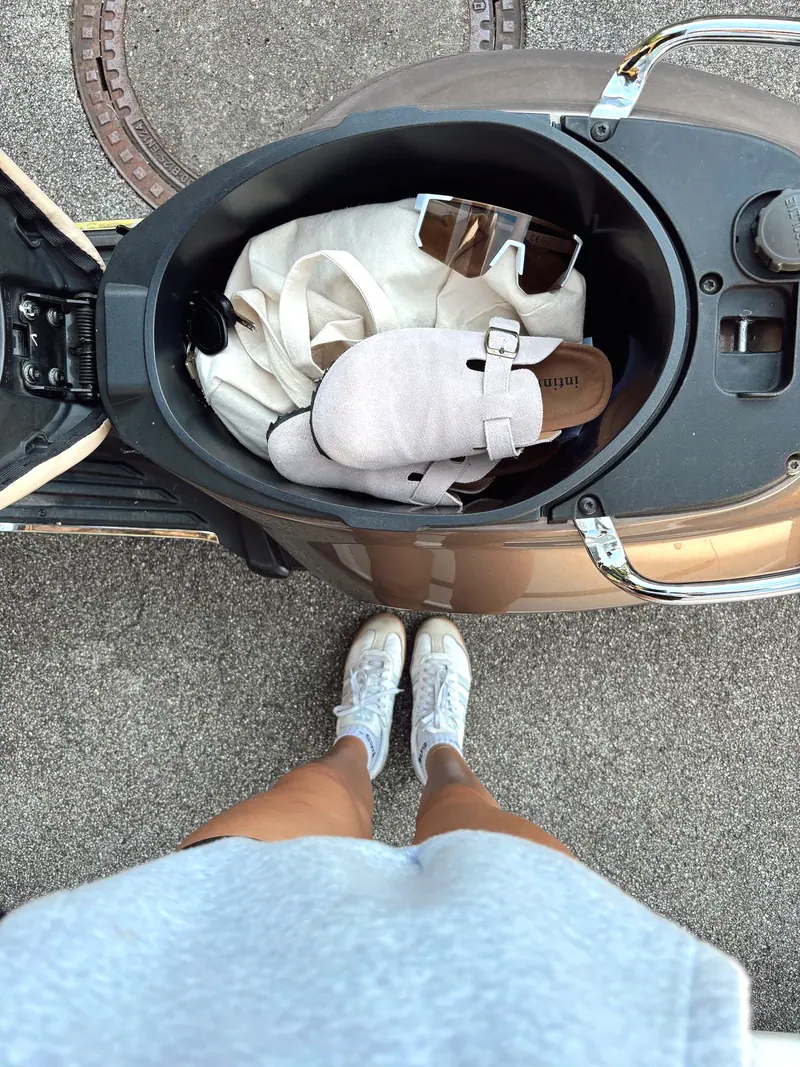
There are limits: you need the right licence (our guide to the licence you need in France explains it), you cannot carry a large suitcase, and you will be riding on the right, which takes a few minutes of attention if you are from the UK. Our guide to riding a scooter in Nice for the first time covers that, from roundabouts to tram rails.
Comparison at a glance
| Option | Best for | Less suited to |
|---|---|---|
| Walking | Old Town, Cours Saleya, Promenade, port | Hills, leaving the city |
| Tram and bus | Airport, station, main roads, tight budgets | Coves, viewpoints, flexible timing |
| Coastal train | One-way trips between coastal towns | Anywhere far from a station |
| Hire car | Inland villages, families, luggage | City centre, parking |
| Bike | Promenade cycle path, early mornings | Hills, heat, long distances |
| Taxi, ride-hailing | Evenings, airport with bags | Budgets, sightseeing with stops |
| Scooter | Coast, hills, Villefranche, Cap Ferrat, freedom | Big suitcases, riders without a suitable licence |
Our advice: mix and match
The smartest plan usually combines several options. Take the tram in from the airport, explore the Old Town on foot, then keep a scooter for the seafront and Corniche days. We deliver free of charge anywhere in Nice, to your hotel, apartment or a meeting point, by appointment: here is how our scooter delivery to your hotel works.
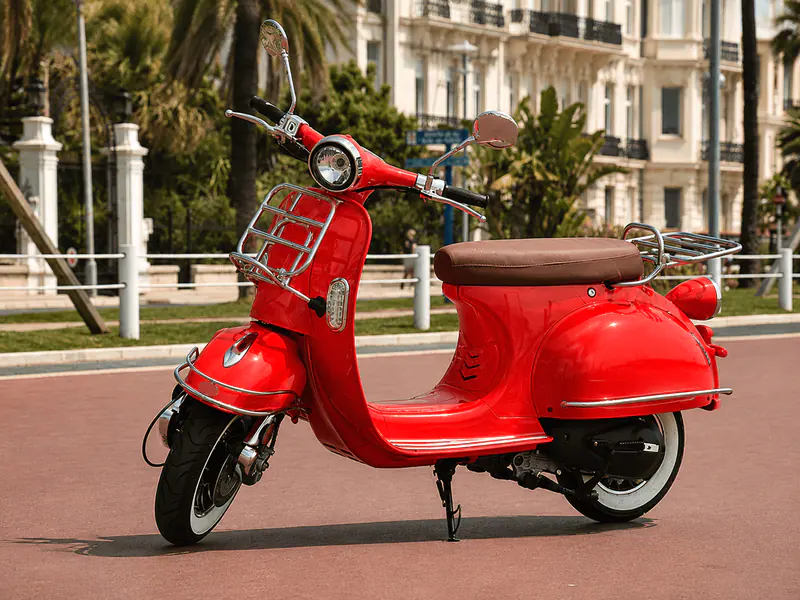
A 50cc such as the Riviera 50, limited to 45 km/h and designed for two, is ideal for Nice, Villefranche and Cap Ferrat. For the Grande Corniche, Èze village or Monaco, choose the 125cc; leaving France requires MatMonScoot's prior written approval, so ask for it when you book. Daily rates start at 35 € with discounts for longer rentals, as shown on our scooter rental prices page.
FAQ
What is the best way of getting around Nice?
Walk in the centre and the Old Town, use the tram for the airport and main roads, and take a scooter for the seafront, the hills and the coastal villages. Combining them is usually the smartest plan.
Do I need a car in Nice?
Not for a city stay. A car helps for inland villages or families with luggage, but traffic and paid parking make it impractical in the centre, and the Old Town is largely pedestrian.
How do I get from Nice airport to the city centre?
Tram line 2 links the airport terminals with the city centre and Port Lympia. Taxis and ride-hailing cars are the alternative with heavy luggage. Check current fares on the Lignes d'Azur website or app.
Is a scooter a good way to get around Nice?
Yes, if you hold a suitable licence. A scooter parks easily in two-wheeler bays, climbs the hills effortlessly and lets you stop anywhere along the coast. A 50cc is enough for Nice, Villefranche and Cap Ferrat.